Quick Key Takeaways — Tankless Water Heater Installation
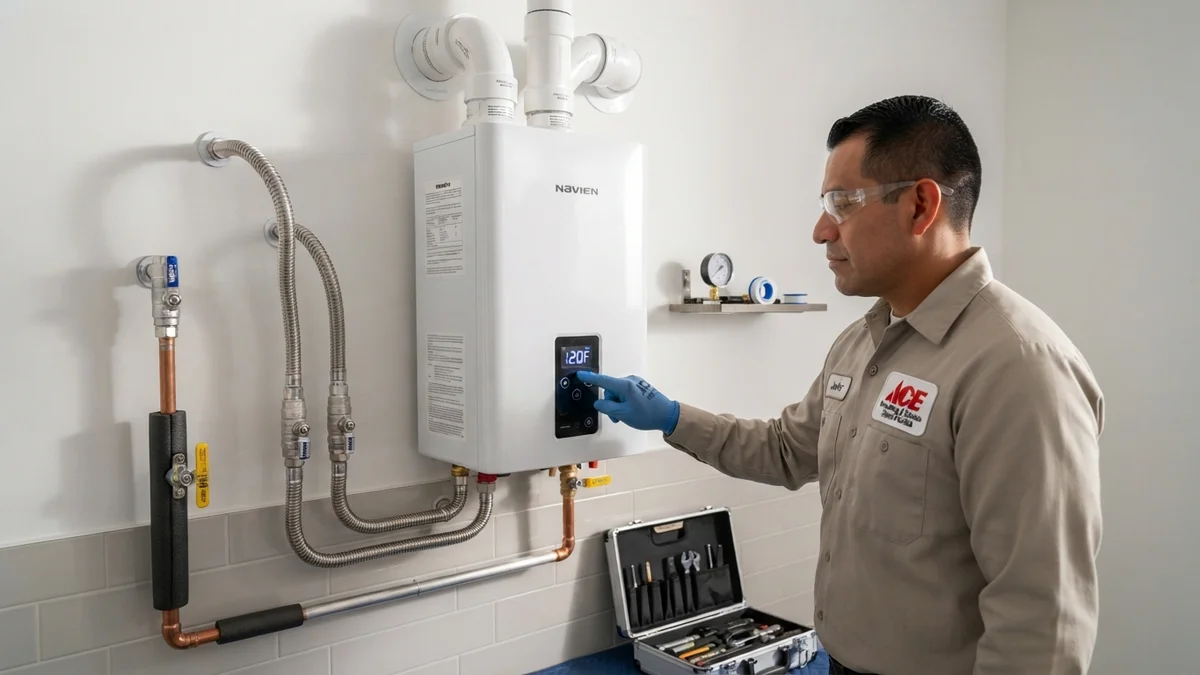
When plumbing failures disrupt your daily routine or threaten your property, obtaining an accurate mechanical evaluation and dependable technical execution is essential. As part of our comprehensive residential and commercial plumbing services, our field specialists provide dedicated support for tankless water heater installation across Tucker, Georgia and neighboring DeKalb County communities. By pairing advanced diagnostic instrumentation with prompt local dispatch and clear written project estimates, we resolve acute failures and restore optimal system operation.
Plumbing performance in Tucker is influenced by demanding environmental conditions, most notably the expansion and contraction cycles of native Georgia red clay soil. This dense, highly plastic subsoil exerts extreme lateral hydrostatic pressure against underground piping during wet seasons and pulls away during droughts, causing subterranean pipe sections to sag, separate at joints, or fracture. Properties in mature communities like Smoke Rise also face intense root intrusion from towering hardwoods that aggressively target hairline pipe joints. Our technicians evaluate these environmental stressors during every service call, ensuring that all repairs provide long-term structural reliability.
Diagnostic Protocol and Technical Methodology for Tankless Water Heater Installation
Proper plumbing repair begins with empirical proof rather than guesswork. When addressing tankless water heater installation in Tucker homes and commercial buildings, our field specialists follow a structured, multi-step engineering protocol designed to pinpoint root failure causes and execute durable, code-compliant solutions.
Our technical workflow incorporates the following stages:
- Initial Hydraulic and Physical Inspection: The technician conducts a thorough evaluation of the affected fixtures, branch lines, and visible pipe connections. We inspect crawlspace piping, assess basement utility connections, and perform baseline pressure testing to determine whether the issue is localized or system-wide.
- Advanced Tool Deployment: Depending on the mechanical symptoms, we deploy Electronic combustion analyzers, digital gas pressure manometers, concentric direct-vent piping, and isolation descaling valves to measure operational parameters, locate concealed pipe runs, or inspect interior pipe walls.
- Written Engineering Proposal: Before turning a single wrench, dismantling fixtures, or cutting into walls or foundation concrete, the technician provides an itemized written estimate detailing the necessary scope of work, commercial-grade materials, and project costs.
- Precision Execution and Quality Clearance: Upon your authorization, the repair is completed using high-quality components meeting the Georgia State Minimum Standard Plumbing Code. We pressure-test the completed repair, sanitize the surrounding work area, and demonstrate the restored functionality to you.
| Mechanical Parameter | Standard Field Diagnostic | Failure Threshold | Recommended Engineering Action | Georgia Code Mandate |
|---|---|---|---|---|
| System Operating Pressure | Calibrated pressure gauge at hose bib | Over 80 PSI or below 40 PSI | Install or calibrate pressure reducing valve | GA Code 604.8 (Max 80 PSI) |
| Drain Velocity and Flow | Hydraulic volume drain test | Water pooling or slow vortex | Deploy commercial mechanical snake or hydro-jet | GA Code 704.1 (Drain Slope) |
| Interior Pipe Integrity | Self-leveling fiber-optic camera | Cracks, root intrusion, joint shear | Spot pipe repair or trenchless sleeve relining | GA Code 702.3 (Material Grade) |
| Joint Seal and Fitment | Ultrasonic acoustic listening test | Microscopic hiss, pressure decay | Solder replacement, ProPEX crimp, shielded band | GA Code 605.14 (Joint Safety) |
| Thermal Expansion Defense | Diaphragm expansion tank gauge | Tank waterlogged, ruptured diaphragm | Install properly sized expansion tank | GA Code 607.3 (Expansion Control) |
Deep Engineering Insights: Mechanical Root Causes in Tucker Properties
Upgrading to an on-demand tankless water heating system represents the pinnacle of residential domestic hot water efficiency and performance. Unlike traditional storage water heaters that continuously consume energy to keep 40 to 50 gallons of standing water hot 24 hours a day (standby heat loss), condensing tankless units activate only when a hot water fixture is opened. Cold water flows through high-efficiency dual-pass copper or stainless-steel heat exchangers, firing gas burners up to 199,000 BTUs to provide continuous, uninterrupted hot water.
Retrofitting a tankless system in a Tucker residence requires precise mechanical engineering calculations. The primary technical consideration is natural gas supply volume. Standard tank water heaters typically fire at 36,000 to 40,000 BTUs and operate on 1/2-inch gas lines. A high-output whole-home tankless unit firing at 160,000 to 199,000 BTUs requires a dedicated 3/4-inch or 1-inch gas branch to prevent gas pressure starvation during peak demand. Our technicians calculate total connected gas loads across your furnace, range, and fireplace to ensure adequate gas meter capacity.
Additionally, condensing tankless units produce acidic condensate water that must be neutralized through calcium carbonate media filters before discharging into household drains. They also require dedicated concentric or twin-pipe polypropylene venting routed directly through exterior walls or roof decks. Our installations include commercial isolation service valves that allow easy annual descaling flushes to remove mineral scale and protect your manufacturer warranty.
Common Symptoms Requiring Tankless Water Heater Installation in Tucker
Plumbing failures often present subtle warning signs before escalating into catastrophic property damage. Property owners who recognize early mechanical indicators can contact our dispatch team to resolve problems before they result in expensive structural repairs.
Typical symptoms that indicate a need for professional tankless water heater installation include:
- Running out of hot water during back-to-back showers, high monthly natural gas bills, and cramped utility closet space: These acute warning signs indicate significant mechanical failure or severe obstruction that requires immediate diagnostic attention from a qualified trade specialist.
- Recurring Secondary Failures: When addressing primary plumbing symptoms, technicians frequently discover underlying issues requiring complementary services, such as water heater replacement to resolve damaged supply pipes, or specialized water heater repair to locate concealed underground leaks.
- Elevated Municipal Utility Costs: Unexplained increases in your monthly water bill from DeKalb County Watershed Management often indicate concealed pipe leakage that requires professional repiping to identify before foundation damage occurs.
For property owners seeking detailed guidance on detecting concealed pipe failures, consult our educational signs of a hidden water leak guide for actionable diagnostic advice.
Frequently Asked Questions About Tankless Water Heater Installation in Tucker
Can a tankless water heater provide endless hot water for a large family in Tucker?
Yes. Tankless water heaters heat water continuously on demand as long as you do not exceed the unit's maximum flow rate (measured in gallons per minute or GPM). A properly sized 9.5 to 11 GPM condensing unit can easily supply hot water to three showers and a washing machine simultaneously without experiencing cold water drops.
Will my Tucker home require an upgrade to its natural gas line for a tankless system?
In many cases, yes. Traditional tank units require roughly 36,000 BTUs and operate on 1/2-inch gas piping. Whole-home tankless units require 160,000 to 199,000 BTUs, which often necessitates upgrading the gas line to 3/4-inch or 1-inch to ensure adequate fuel pressure when your furnace and water heater operate concurrently.
What regular maintenance is required for a tankless water heater?
Tankless water heaters require an annual descaling flush using food-grade white vinegar or a specialized citric descaling solution pumped through isolation service valves for 45 to 60 minutes. This removes calcium scale from the narrow heat exchanger passages, ensuring peak thermal efficiency and preventing heat exchanger burnout.
Local Infrastructure and DeKalb County Regulatory Standards
Executing plumbing repairs in Tucker requires a thorough understanding of municipal codes enforced by the DeKalb County Department of Watershed Management (DWM) and the City of Tucker Building Department. All water supply alterations, sewer lateral repairs, and fixture installations must strictly comply with local environmental safety and cross-connection control regulations.
Under DeKalb County DWM ordinances, property owners are legally responsible for their entire private sewer lateral, extending from the exterior building foundation to the connection point at the municipal sewer main in the street or easement. When expansive red clay soil causes private sewer pipes to crack or separate, groundwater infiltrates the municipal wastewater system during heavy storm events, creating severe treatment plant overload. Our technicians ensure all replacement piping utilizes heavy-wall schedule 40 PVC or seamless HDPE with approved cleanout fittings, satisfying all local inspection requirements.
To review comprehensive regional pricing parameters for this service, consult our transparent tankless water heater cost guide or explore our master plumbing cost guide.
Clean-Tech Property Protection and Customer Guarantees
We recognize that inviting service professionals into your home requires trust. Every field specialist in our network adheres to our strict clean-tech protocol:
- Sanitized Shoe Covers: Technicians put on protective shoe covers before stepping across your doorway, keeping your floors clean and protected.
- Heavy Drop Cloths: Canvas protective cloths are placed beneath all tools, fixtures, and work areas to prevent scratches or water damage to your flooring.
- Complete Jobsite Cleanup: After work is completed and tested, the work area is thoroughly cleaned and sanitized, leaving your living space spotless.
- Prior Written Authorization: You maintain complete control over project scope with an itemized written estimate provided before any physical repair begins.
Contact Plumbing Tucker today at (470) 802-9130 or submit an online request through our contact page to coordinate prompt diagnostic service for your property.
Transparent Pricing and Diagnostic Disclosure
Project costs, diagnostic fees, and installation rates displayed or discussed are regional market estimates for Tucker, GA and surrounding jurisdictions. Estimates are for budgeting purposes only. Actual prices vary based on on-site conditions, pipe accessibility, fixture requirements, and DeKalb County code compliance parameters.
Every service call begins with a thorough on-site physical evaluation and a clear written estimate before any physical repair commences. No surprise fees, unverified dispatch charges, or unauthorized scope changes.